Canadian Association of Emergency Service Dispatchers

Association Canadienne de Répartiteurs et Répartitrices de Services d’Urgence
ABOUT
The Canadian Association of Emergency Service Dispatchers (CAESD) is a national, professional organization dedicated to supporting, representing, and advocating for Emergency Service Dispatchers across Canada.
Dispatchers are the critical first point of contact in emergencies, providing rapid assessment, triage, coordination, and support to both the public and field responders. Despite the complexity and importance of this role, dispatchers often lack consistent recognition, standards, and support across provinces and territories - a gap our Association is committed to addressing.

You matter. Your service counts.
You bring peace of mind every second of the day, every day of the year. Our members are here to acknowledge and recognize what others don’t.
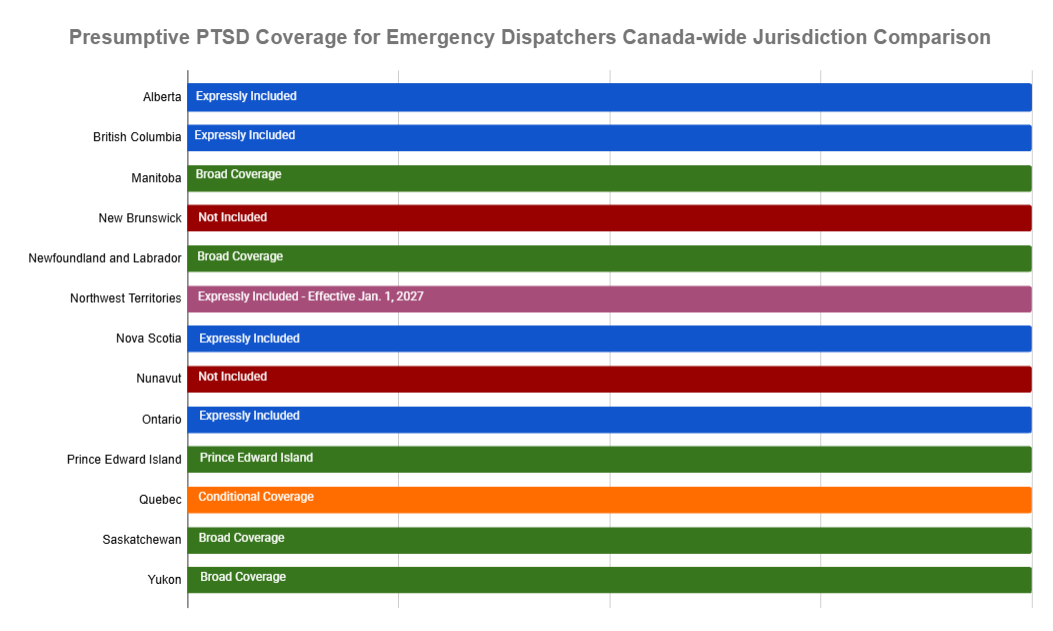
Canada-wide Presumptive PTSD Coverage Emergency Dispatchers
Charts Explained:
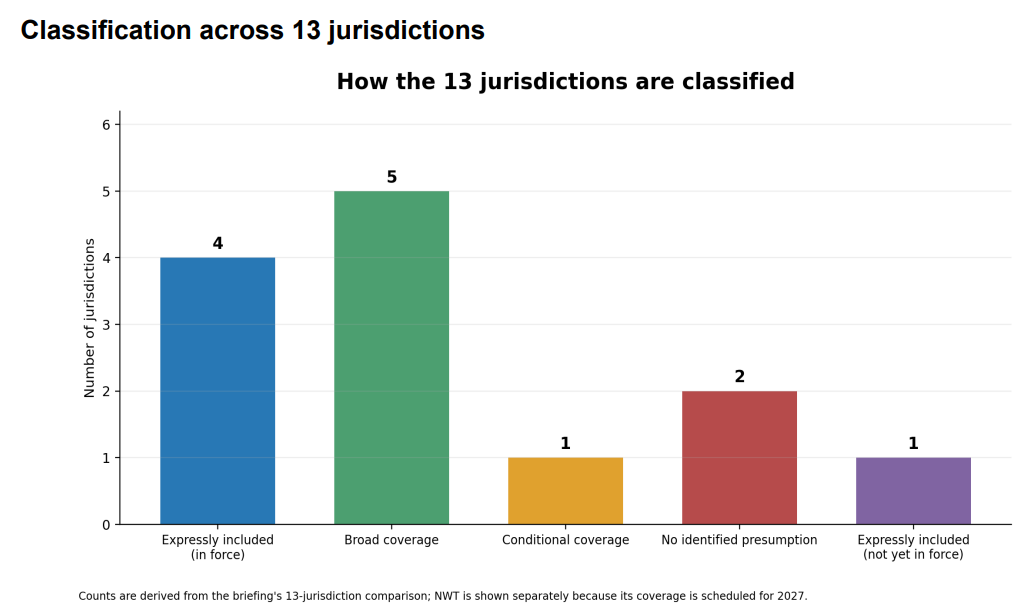
Expressly Included means dispatchers are specifically named in the framework described in the briefing.
Broad Coverage means a general worker presumption may apply subject to statutory conditions.
Conditional Coverage means occupational exposure criteria must be met.
Not Included reproduces the briefing's identified gap.
The Northwest Territories is shown separately because the briefing states its express inclusion takes effect January 1, 2027.
With decades of combined lived and field experience, our association is staffed by former first responders and safety consultants who have managed thousands of critical incidents, both locally and nationwide. Continuous education and training along with industry standards enable us to deliver recognition.
Collective Strength - Unified Response

Ed O’Meara
Founder & CEOEdward O'Meara, M.A., serves as Founder and President of the Canadian Association of Emergency Service Dispatchers, bringing more than three decades of experience in emergency communications, mental health advocacy, and dispatcher wellness. Beginning his career in 1991 as a 911 call taker and police dispatcher, Ed developed a deep understanding of the demands, complexities, and psychological impacts associated with emergency service dispatching.
Drawing from both professional experience and personal lived experience with operational stress injuries, Ed became a dedicated advocate for improving mental health supports for dispatchers. His commitment to understanding resilience, recovery, and psychological well-being led him to pursue graduate studies at McMaster University, where he earned a Master's degree in Counselling and Spiritual Care in 2026.
In 2026, Ed founded the Canadian Association of Emergency Service Dispatchers to advance a long-held vision of a unified national organization dedicated to the recognition, support, and professional advancement of emergency service dispatchers. Under his leadership, the Association advocates for consistent standards across Canada, including professional recognition, mental health resources, training requirements, and equitable access to supports for dispatchers regardless of jurisdiction.
Through his role as President, Ed leverages his unique combination of frontline dispatch experience, academic training, and mental health expertise to champion a stronger, more consistent future for emergency service dispatchers nationwide.

Emily Zufelt
Board of DirectorsEmily Zufelt serves on the Board of Directors of the Canadian Association of Emergency Service Dispatchers, bringing more than two decades of experience in emergency communications and public safety. As a former 911 police communications operator, she has played a critical role in coordinating emergency response, supporting frontline personnel, and serving as the first point of contact during crises.
A respected trauma-informed advocate for dispatcher mental health, recognition, operational wellness, and post-traumatic growth. In addition to her work in emergency communications, she serves as Director of Military Engagement with Concussion Legacy Foundation Canada and contributes to national outreach and storytelling initiatives through Project Enlist Canada, supporting veterans, serving members, and other trauma-exposed populations.
Emily combines professional expertise with lived experience to advance awareness of the unique challenges faced by emergency service dispatchers. Through her work as the creator and host of “What's Your Twenty? “ podcast and her broader advocacy efforts, she has become a leading voice promoting resilience, education, and support for trauma-exposed professionals and their families.
In her role as Director, Emily leverages her extensive experience in emergency communications, public education, and mental health advocacy to strengthen the Association's mission of advancing professional recognition, national standards, and meaningful support for emergency service dispatchers across Canada.

Nicole Edens
Board of DirectorsNicole Edens serves on the Board of Directors of the Canadian Association of Emergency Service Dispatchers, bringing almost two decades of frontline emergency communications experience and a strong background in public sector leadership, program management, and strategic operations. During her career as a 9-1-1 Dispatcher with the Ottawa Police Service, she played a vital role in supporting emergency response operations, coordinating critical incidents, and serving as a lifeline for both the public and frontline personnel during times of crisis.
Following her service in emergency communications, Nicole transitioned to the federal public service, where she has held advisory, analytics, and portfolio strategy roles with Global Affairs Canada. Her experience spans program management, organizational strategy, data analysis, and operational improvement, providing her with a unique perspective on leadership, governance, and systems-level change.
Committed to advancing wellness and professional excellence within the dispatch profession, Nicole is also pursuing studies in psychology, further strengthening her understanding of human behaviour, resilience, and the psychological realities faced by emergency service personnel.
As a Director, Nicole leverages her combined experience in emergency communications, public administration, and academic study to support the Association's mission of advancing recognition, professional standards, mental health supports, and national consistency for emergency service dispatchers across Canada.


Dr. André M. Levesque
Special AdvisorDr. André M. Levesque, OMM, OOnt, CD, FRSA, serves as Special Advisor to the Canadian Association of Emergency Service Dispatchers, bringing decades of distinguished public service and strategic leadership to the organization.
His extensive background includes over a decade of administrative and governance experience at Ottawa City Hall, alongside a highly decorated 35-year career with the Canadian Armed Forces.
Dr. Levesque’s deep respect for and understanding of the emergency services sector is highlighted by his past role as Chair of the Ontario Honours Advisory Council, where he adjudicated bravery decorations for police, fire, and paramedic personnel.
A lifelong advocate for community health and safety, Dr. Levesque has also dedicated nearly forty years to St. John Ambulance in Canada. His service culminated in his appointment as Chancellor of the Priory of Canada for the Order of St. John.
Through his role as Special Advisor, Dr. Levesque leverages this vast expertise in institutional governance, command structures, and emergency services to guide and advance the Association’s mission nationwide.
Sean O’Meara
Board of DirectorsSean O'Meara serves on the Board of Directors of the Canadian Association of Emergency Service Dispatchers, bringing extensive experience in emergency communications and frontline public safety operations. Throughout his career as a police dispatcher, Sean played a critical role in coordinating emergency response, supporting first responders, and managing high-pressure incidents where timely decision-making and effective communication were essential.
A strong advocate for dispatcher wellness, professional recognition, and operational excellence, Sean understands the unique demands placed on emergency communications personnel and the vital role dispatchers play in public safety. His experience provides valuable insight into the operational realities faced by dispatchers across Canada.
Your Questions
Answered
Who are we?
The Canadian Association of Emergency Service Dispatchers (CAESD) is a national professional organization dedicated to supporting, representing, and advocating for Emergency Service Dispatchers across Canada. Dispatchers are the critical first point of contact in emergencies, providing rapid assessment, triage, coordination, and support to both the public and field responders. Despite the complexity and importance of this role, dispatchers often lack consistent recognition, standards, and support across provinces and territories - a gap CAESD is committed to addressing.
What constitutes an Emergency Dispatcher and why does it matter?
A comprehensive definition should consider:
Public Safety Answering Point (PSAP) personnel.
911 call-takers.
Police communications operators.
Fire dispatchers.
Ambulance and paramedic dispatchers.
Emergency medical communications officers.
Emergency telecommunications operators.
Emergency communications supervisors.
Integrated emergency communications personnel.
Personnel who receive, assess, prioritize, process or transmit emergency communications.
This matters because some jurisdictions use occupational definitions that depend on the services being dispatched. The legislative objective is to recognize the functions performed rather than simply the employer's organizational structure.
Why is a national association needed?
Emergency Service Dispatchers play an essential role in Canada’s emergency response system, yet their professional landscape is fragmented. Training requirements, job classifications, mental-health supports, and recognition vary widely between jurisdictions. In some provinces, dispatchers are recognized as first responders: in others, they are not. Access to presumptive PTSD legislation, standardized competencies, and equitable compensation is inconsistent. The lack of national cohesion affects dispatchers’ wellbeing, professional development, and long-term career sustainability. CAESD exists to unify the profession, strengthen standards, and ensure dispatchers receive the recognition and support they deserve.
Let’s Stay in Touch
Interested in learning how the Canadian Association of Emergency Service Dispatchers can help? Contact us today and discover the difference a dedicated association makes during life’s toughest and best moments.

Follow Us On Social